‘This belongs to’ … realizing who our special needs kids really belong to in a hospital cafeteria

this belongs to

‘This belongs to’ … realizing who our special needs kids really belong to in a hospital cafeteria

I sit in the hospital cafeteria, a half eaten chicken sandwich and a bottle of water is positioned in front of me on the plastic tray that reminds me of grade school. My foot taps. A loud metronome sounds in my head. Tick, tick, tick, tick.

I scoop up another bite of chocolate pudding with whipped cream, an indulgence saved in my world for hospital cafeterias.

I look around for other parents. You can tell who they are, either by exhausted expressions, or by the white ‘this belongs to’ bag that carries their child’s things during surgery.

In the last seven years since I became a special needs mom, I’ve been in the hospital cafeteria countless times while waiting for one of my two daughters with Down syndrome.

Today Polly has two quick outpatient surgeries. Hopefully, it’s an in and out day; a tooth capped, a tooth pulled, and muck cleared out from the tear ducts in her eyes.

But there have been times when I’ve sat here for a reprieve during a much longer stay in the hospital; a brain surgery, or a scary test, or for recovery from a catastrophic stroke.

I put down my chocolate pudding spoon, and place my trembling hand on the cool white ‘this belongs to’ bag, the only thing left of my child; her scuffed up gym shoes, a pair of jeans, a plain pink shirt, and wait for a page that she is out of surgery, and that I can go to her, take her in my arms, and hold back her hair if she vomits from the anesthesia.

This isn’t the stuff parents dream of when we have children. No one thinks their child will be in need of life saving surgery. We all assume an extra chromosome or another special need will happen to someone else. But not to us.

But this is the stuff of life. Kids get sick. Kids are born with special needs. They fall off the monkey bars at school and break their arms. They wake up in the middle of the night with a tightening in the chest, or a stiff neck, or a fever of one hundred and four. They stop for pancakes with their mom and sister one bright Sunday morning, and have a stroke right there in the middle of the restaurant.

This belongs to …

And so we parents find ourselves sitting listlessly in hospital cafeterias, spooning chocolate pudding to our lips for comfort, gripping the white hospital bag of our child’s belongings, and wondering why in the hell God would allow such a thing to happen to them.

And to us.

I pat the ‘this belongs to’ bag like it is a loyal dog curled up next to me. After Polly gets out of surgery and recovers, God willing, I will take her things from the bag and put them back on her; her jeans, her pink shirt, her scuffed gym shoes. She’ll once again be mine, belonging to me, and we will toss the white bag in the trash and be on our way.

But the ‘this belongs to me’ bag will stay with me. It’s a reminder that my child isn’t actually mine, but God’s. Placed in my charge, at least for a little while, I am her white plastic bag that holds the precious treasure known as her life.

I will remember that there is someone who loves her too, loves her more, and has a good plan for her. And for me.

In the midst of crazy scary uncertainty in life, when kids get sick, when we parents find ourselves in waiting rooms or hospital cafeterias, I’ve come to learn that God is fine with our kicking and screaming, and fiery questions … “Why her? Why us?” We don’t have to be polite with God, or try to make it seem like our faith makes us strong and ready for these trials. No, we can be honest. We can be raw.

If we are able to get quiet enough to listen, and are patient enough to wait, he will answer.

And this is what he’ll say.

“This belongs to me.”

The Special Needs Soul

(Join me in welcoming my friend Meredith Cornish who is guest posting today. Read more about Meredith’s awesome family at www.cornishadoptionjourney.com.)

holding glass

The Special Needs Soul

Here’s something to think about… does every person have a soul?

If you are a Christian, you might answer without blinking and not feel the need to think about it for even a moment, however I want to challenge you to think a little further about how your life and surroundings may reflect this.

If you believe that every person has a soul, then in your town/city/region, is there an opportunity for every person in your area to learn about the saving power of Jesus Christ on a regular basis? To be a part of The Church?

What about the blind man? Someone can drive him to church. The deaf man? There are often interpreters if needed. What does the legless man do? Is there a ramp to get in?

What about the person with autism?

Or a developmental delay?

Or sensory processing disorder?

No, really. What about them?

Let me ask the questions again. Does every person have a soul?

Is there an opportunity for every person in your own community (including the individual with special needs) to learn about the saving power of Jesus Christ on a regular basis as a part of The Church?

Jesus spoke of “the least of these” and when we minister to them we minister to Him. (Matthew 25:40). Have we forgotten? Or do we consider the missionaries sent to Eastern Europe, Africa and Caribbean nations “enough” to consider our ministry complete?

Think about it: where do many people focus their efforts when out “on assignment” in the mission field? They immediately flock to the orphanages where children so desperately need to hear the Gospel, receive love, and be hugged, taught, and held.

While there, the child that cannot speak, has no eyes, is in a wheelchair, or the one that shyly follows the others around without being able to fully participate due to disabilities tend to be the children who are the most sought out to minister to. Sure, there’s the feisty little boys that want to wrestle and the girls that want their nails painted, but you’ll notice extra care taken to bring these children— the ones with disabilities— to the forefront to be ministered to alongside their peers. An extra measure of care and joy is often administered along with the ‘treasure’ of time energy that is given to that child as the Gospel is lived out.

What about at home? Where are these children when the same person gets back to their comfortable bed and out of the mosquito ridden tent or unairconditioned hotel room cohabitated by rodents? Those children live down the street. They aren’t called the shy child or the one that doesn’t speak. Instead we label them as autistic, or say the name as developmentally delayed, or intellectually disabled.

Here in the comfort of their own neighborhood, the children are… invisible. As a nation we have put the “burden of care” on the shoulders of the family, and any assistance on the government. Where are their spiritual needs met?

So, I ask again, Does every person have a soul?

Is there an opportunity for every person in your own community to learn about the saving power of Jesus Christ on a regular basis as a part of The Church?

Is a person with special needs somehow of lesser “worth” to the Kingdom of God? Are they made in God’s image (Genesis 1:27)? Were they knit together in their mother’s womb, fearfully and wonderfully made (Psalm 139:14)? Are they a part of the Body of Christ (1 Corinthians 1:21-26)? Did Christ die for them (John 3:16)? Don’t they need to be taught about Jesus too (Matthew 28:19-20)??

Something to think about…

Tomorrow’s a ‘no’ day, a needed reminder in parenting kids with special needs

Tomorrow’s a ‘no’ day, a needed reminder in parenting kids with special needs

no day

“Have a great day, Polly! And remember, make it a ‘YES’ day!”

She stopped in her tracks and pivoted to face me.

“Ok, Mom, but tomorrow is going to be a ‘no’ day.”

My husband and I tried to hold it together, as we do daily with the one liners easily crafted by our funny little girl.

Once I shut the door behind my little family, wiped the tears of laughter from my cheeks, and relaxed my tightened stomach muscles from my gaiety, I started to think deeper about Polly’s words.

Tomorrow’s a ‘no’ day.

What an unknown concept to parents of kids with special needs. Saying no. Having a ‘no’ day.

Read the rest of this post at www.notalone.org.

Leading the way, thoughts about sisterhood and Down syndrome

lead the way

(I’m on vacation this week … So here’s a post from the archives. Enjoy!)

Leading the way, thoughts about sisterhood and Down syndrome

When Polly was born and we learned of her diagnosis of Down syndrome, I grieved the child I expected. I didn’t know much about Down syndrome. My mind quickly flipped to un-flattering images of a child sitting alone at recess, or a mother in her golden years walking slowly through the aisles of Wal-Mart so that her adult daughter, still a child, could keep up. Sadly, it took me a while to let my guard down and fall in love with Polly.

Polly’s older sisters led the way. From the moment they met her, they dripped with love for her. They loved everything about her: “Oh, look at her pudgy little hands! Look at her wispy brown hair. Isn’t she just the cutest little thing ever?” When we later explained to them that Polly had Down syndrome, and that she would need a little extra help doing things, they didn’t bat an eye. “I guess it’s good that God gave her older sisters, huh, mom?” Elaina said.

Indeed.

Three years ago, when Evangeline joined our family, Elaina and Zoya took the lead once again.

Elaina stayed with me for seven weeks in Ukraine until the adoption was finalized. She spent long, Kiev days tickling Evie and helping me take her outside for walks as we waited for the paperwork for the adoption to go through. Once again, I struggled, and my kids led the way.

Snapshot from today:

A toy came home in Polly’s backpack today from Kindergarten. It’s one of those birthday favors. You blow on it and it flings out in front of you. What fun! Polly figured it out right away, and I was thrilled that it wasn’t the one with sound.

A little while later while I was finishing up an email on the computer, I saw Polly bring her new toy into the kitchen. Evie was sitting up on top of the table (one of her new favorite perches in the house), kicking her feet off the edge.

“Look, Evie,” Polly said, moving carefully, climbing up on the bench and then sitting down next to her on the table. “Look, Evie, it blows out,” she said, and then promptly gave a demonstration. I fought the urge to intervene. Evangeline is easily spooked and she is not Polly’s biggest fan. Most people love a happy, in your face five-year-old but Evangeline could do without. But I took a breath and waited to see what happened.

“You see that, Evie. It’s red. It’s pretty. It’s fun.” Polly blew on her toy again. “You like that, Evie. Do you?”

And the most amazing thing happened. Instead of reaching out and grabbing the toy. Instead of crying. Instead of getting the heck out of dodge (read: getting down off the table and away from Polly a.s.a.p.) Evie laughed.

She laughed.

Polly blew her toy again. Evie kept laughing. And for about five minutes they seemed like they were, I don’t know what’s the word?, playing together.

It was magical.

When Polly was born, I worried that she would feel alone but I learned quickly that her sisters would never let that happen. When Evangeline joined our family, I worried, I still worry, that we won’t be able to reach her. Some days she is very far into her own world. And then today, Polly initiated a game with Evie and Evie, just a little, for a few moments, let her in. Polly had Elaina and Zoya to prod her along in her development, and now she is starting to lead the way for Evie.

The magic is now gone. Polly broke her toy because she kept twisting the blow out part. Evie stole all of Polly’s pretzels out of her favorite ice-cream bowl. Polly is running circles around the house yelling, “hey, Evie, leave my snack alone” and Evangeline has climbed off the table. As I type she is eating pretzel bits off my, um, super clean kitchen floor.

But I don’t care. I’ll take the five magical moments when I saw Polly work her sister mojo on Evie.

Sisters are the best therapists in the world.

In My Arms, the privilege of holding my daughter with Down syndrome

© Amdezigns | Dreamstime Stock Photos & Stock Free Images

© Amdezigns | Dreamstime Stock Photos & Stock Free Images

In My Arms

“Mom!” Polly yells out in her sleep. Her body thrashes to and fro on our Queen sized bed. Her legs kick the covers off. Sweat glistens her forehead.

Her father and two older sisters went out for the night. Her little sister, having been all tuckered out from school and therapy had been asleep for an hour. I bedded Polly in next to me, thinking that my husband would move her when he gets home, and that her slight of breath, up and down, methodical, musical, may inspire me as I grab a few last minutes in the day to write in the quiet house with our fuzzy white dog at my feet.

“Honey, what’s wrong. Tell Mama what’s wrong.”

She doesn’t respond but continues to fuss and squirm on the bed.

“Shh, there there,” I attempt to settle her back into whatever part of her dream cycle she momentarily eludes. This part isn’t new to me, a seasoned mother of four. There have been countless nights in the last twelve years where I’ve brushed wet hair off a forehead, hummed a melody, and lulled a child back to sleep.

But my coaxing doesn’t work.

“What’s wrong, Polly? Does something hurt?”

My daughter nods her head yes, and a shot of electricity zaps through my extremities.

When she was born at 37 weeks, Polly wasn’t breathing. The doctors resuscitated her, and she spent the next three weeks, the first three weeks of her life, in an incubator fighting to breathe and battling a blood infection.

It was weeks before I got to hold her for the first time. By the time I finally felt the weight of her tiny, five-pound being in my arms, her father and I had already been informed of her diagnosis of Down syndrome.

We were robbed.

Her too weak to leave her plastic dome and me, too weak to fathom the curve ball of Down syndrome in my well thought out life. I’ve had moments through the years where my arms ache to hold Polly the baby. What I wouldn’t give to go back and scoop her up, to hell with my fear of the unknown, to hell with sickness, because if I could go back in time, I’d probably have the power to make her well with a slight touch to her forehead.

“Show me where it hurts.”

Polly gestures towards her head.

“Your head? Your head hurts?”

She nods yes again. I pull her up onto my chest. It’s not as easy as it sounds. She’s in first grade. We are planning her seventh birthday party in a few short weeks.

But I pull her to me, because we don’t screw around with headaches in this family.

Three years ago, Polly had a catastrophic stroke which later resulted in the diagnosis of Moyamoya, a disease that thins the arteries in the brain to the point of strokes and seizures. Apparently, she had not been born with one diagnosis (Down syndrome) but two (Moyamoya), and unbeknownst to us, this disastrous disease had been causing mild strokes in her brain throughout her short little life.

Polly underwent two brain surgeries that diminished the chances of recurrent strokes and seizures from 67% to 7%. She rocked the surgeries, actually running circles around me after the second one, just days after her neurosurgeon cut through skin, skull, and brain to create new paths of blood flow for our girl.

“Here, honey, let me see.” I force Polly’s face towards mine and examine her for signs of stroke or seizure. There’s no twitching, or any other signs I know to look for, so the fear of the moment releases into the air around us. I hold her to my heart, like I longed to do after her birth so many times. She settles in my arms and sinks into me. My body is quicksand. I engulf her.

In her short life we’ve danced around death more than I ever expected.

But I don’t take for granted that she is here, tonight, in my arms. I know too many mothers whose arms are empty today. And that knowledge stays with me. My heart is with those mothers. But she’s here. It is a privilege to feel her weight on me, and to know that she is happy, she loves her life, and at least today, is well enough to fill up on her joy, splashing those around her, and continually plugging up my heart, so that I can be filled too.

Polly sighs and falls deeper into sleep.

And I hold here. Here. Like this well into the night.

Because I can.

The most beautiful and terrible of promises, lessons learned from my brother with autism

freeimage-3833080

(Join me in welcoming Caroline McGraw as she shares some lessons learned from her brother with autism. Welcome Caroline!) 

The most beautiful and terrible of promises, lessons learned from my brother with autism


Growing up in Church

You wake up with a song stuck in your head, a song you haven’t heard in years. You have a line or two from that song in your mind, on repeat.

Such was the case for me this morning. The song in question is a cheesy church song, one I used to sing in the children’s choir. The chorus:

“Kids under construction / Maybe the paint is still wet

Kids under construction / The Lord may not be finished yet.”

The words bring a rush of memories:  the look of photocopied song sheets with big bold type. The way the heat of my hands would make the thin paper crumple. I tried to hold lightly, to keep the sheets crisp, but I never could. Our commanding director, telling us exactly what we should wear and how we should stand. The way it felt to sing, surrounded by kids’ restless energy. (I can still feel the collective need to bolt as soon as rehearsal ended.)

And I’ve been thinking about what it meant to have grown up in that particular church, with that specific set of rules and beliefs. These memories — the song, the choir, the sense of trying so hard to get it right — represent all the things I struggle with in my faith today.

I fight the feeling that it isn’t okay to just be human. I know, too well, the sense that improvement comes before contentment, that if I’m not living up to impossible standards, I should feel guilty.

My childhood church put a great deal of emphasis on doing everything just right, every ritual and holiday and service … yet the song isn’t actually about that at all. It emphasizes being transformed.

In fact, it seems rather subversive to me now, the fact that we sang that song in my church, in a place that put so much trust in our capacity to change ourselves.

Furthermore, its verses speak of inclusion, compassion and loving relationship (“And make room for all other children of Yours … [God] cares and [God] knows us by name”). Then as now, these are the essentials of my faith.

My brother with autism

I have one younger brother, Willie, who is on the autism spectrum. And so, very early on, I could feel the tension between what my church modeled — that we had to dot every i and cross every t in order to be God’s ‘chosen’  — and what loving my brother taught me. (These apparent contradictions were made all the more complicated by the fact that the church’s members were — and are — accepting of Willie. It may have preached ‘measuring up’, but its members lived out love to my family.)

Being Willie’s sister showed me that God isn’t found in ‘having it all together’ or being perceived as ‘normal’. He helped me to realize that anyone can pray, that prayer doesn’t require a specific set of ‘approved’ words, just an attitude of the heart:  open, receptive, kind. Willie even gave me my first hope of heaven, heaven as a place where I could talk freely with him.

As I once wrote, “[Heaven] would be a place without the limits of autism on [Willie’s] part or lack of knowledge on mine, a place where I could ask him a question and receive a complete answer. I remember wanting to ask him about the smallest details of our life as kids; I wanted to know if Cheerios were really his favorite cereal or if he ate them simply because that’s what Mom bought. I wanted a window into his mind and heart.”

And when Willie grew older and started engaging in aggressive and self-injurious behavior (a struggle that has lasted more than a decade), I’m still learning from him, from our family. In the wake of his destructive behavior, our parents have showed me that real love is stronger than any of the terrible things we can do.

In caring for Willie, our parents showed me the face of God, God who speaks to our hearts, saying that we are seen, known, and loved even at our worst. This, I believe, is the most beautiful and terrible of promises.

What now?

And where does that leave me now, as the old song fades from my mind? My memory of children’s choir is shaded by strictures and rules and get-it-rights, but the actual song lyrics suggest that maybe, just maybe, that’s not our job.

Maybe our job, instead, is to learn to surrender:  to the reality of unconditional love, and the promise of being transformed by it.

CGM Bio, scaled down.jpg

Caroline McGraw is a would-be childhood paleontologist turned storyteller, digging for treasure in people with autism and intellectual disabilities (and empowering caregivers to do the same).

Her new Kindle Single, I Was a Stranger to Beauty (ThinkPiece Publishing) is now available on Amazon. Readers are also invited to receive a complimentary copy of Caroline’s digital book, Your Creed of Care: How to Dig for Treasure in People (Without Getting Buried Alive) via her website, A Wish Come Clear.

So much going on today, Not alone parenting and taking the pledge to end the “R” word

So much going on today, Not alone parenting and taking the pledge to end the “R” word

I’m over at Not Alone sharing my post about 10 special needs of special needs parents.

special-needs-parents1

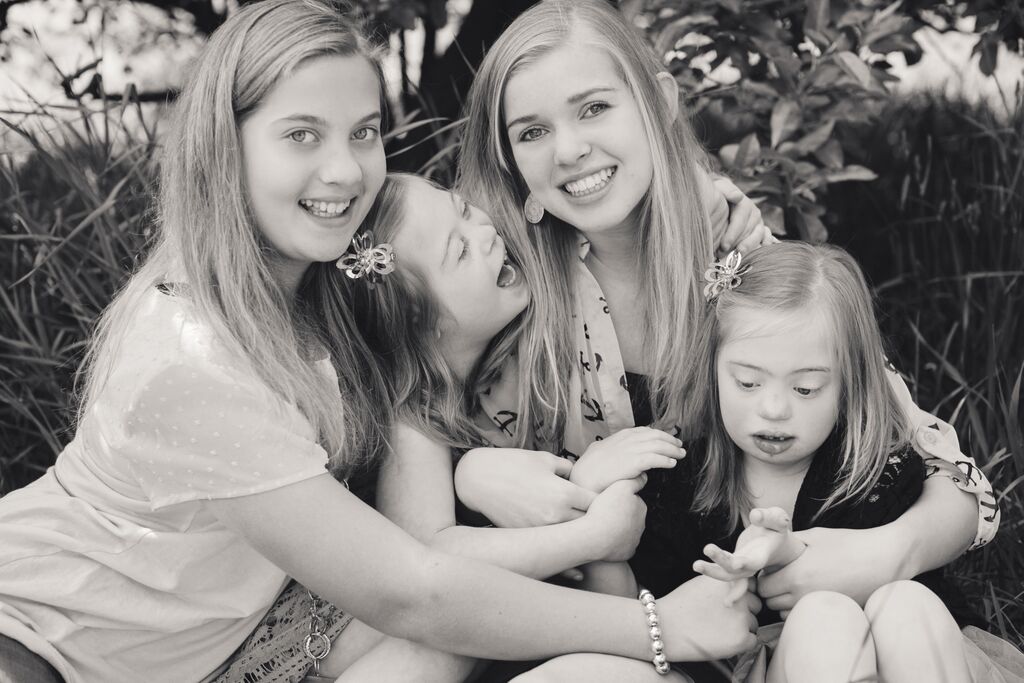
As a mother to two little girls with Down syndrome, I need parents of typically developing kids to know something.

I have needs.

And yes, they may be a bit special because I have “children with special needs.”

Parental support from others in this crazy business of raising kids is essential in a mother or father’s life. All too often parents of kids with special needs are isolated because their experience is vastly different from others. It is painful when support falls flat, or if it doesn’t show up at all.

How do you act around your friends who have children with special needs, or around the woman at school you see at pick-up, or the dad standing behind you in line at the grocery store?

Here are a few suggestions for you … (read the rest of this post at Not Alone) …

And also, today’s the day to take the pledge to end the “R” word in the Spread the Word to End the Word Campaign.

540910_10200286870310842_792599957_n

Hope over here and take the pledge. It will take two seconds.

My daughter Evangeline is non-verbal.

Be her voice!

I’m afraid of going on vacation with my kids who have special needs …

© Dstamatelatos | Dreamstime Stock Photos & Stock Free Images

© Dstamatelatos | Dreamstime Stock Photos & Stock Free Images

I’m afraid of going on vacation with my kids who have special needs …

But we are doing it anyway.

In a couple of weeks, we are taking the kids to Maryland for their spring break from school.

I’m afraid.

It is a 14 hour drive. Four kids, one old, plain Dodge Caravan that is starting to fall apart, and two parents who no doubt will be white knuckling it the whole trip.

A friend of my husband’s is giving us his house for a week on the ocean. Nice, right?

So why am I so afraid?

Vacationing with kids with special needs

Two of my daughters have Down syndrome. Polly doesn’t like loud noises. Evangeline struggles in restaurants. Both girls have aversions to certain food textures so eating out is tricky. Polly is a routine girl. If Evangeline is in a crowd too long, she will go into sensory overload which includes rocking violently back and forth, crying, and possibly hitting her head on any hard surface she can find.

Honestly? It’s much easier to just stay home; a place that is familiar to my girls. A place where the routine is down pat, their needs are met, and where I can attempt to control their surroundings.

But that’s no way to live

I have to fight the urge to keep my little girls close and box ourselves into a predictable little world.

Kennedy said ‘Conformity is the jailer of freedom and the enemy of growth.’

The only way for our family to enjoy outings and vacations and trips to restaurants is to well, do them. It’s not fun at first. It’s terribly difficult work. We go out to eat, and by the time everyone is putting on coats to leave I’m in an awful sweat. My hands are clammy, one of my four kids is probably crying while the other one is ticked about something inconsequential.

Ugh.

But we do it anyway.

Because all six of us: My husband Sergei, our daughter Elaina, Zoya, Polly, and Evangeline, and I all deserve full lives.

Not only do we deserve bigger, experienced lives, but it is the only way for us to grow, and to become better versions of ourselves.

Eventually, Evangeline will realize that restaurants aren’t scary places. I can buy some headphones for Polly to wear if we go someplace loud. If Evie gets overwhelmed I can take her outside for a walk to settle down. I can hold her in a tight embrace and point out all the things of the world we get to see by putting ourselves out there just a little bit.

Stepping out of our comfort zones is a good choice.

So we are going on vacation

So we go. We’ll pack up the car. Bring toys, games, and books for all the kids. Sergei will load his iPod with family favorite tunes, and I will take deep breaths, and ask God for safety, and light, and fun for all as we head into a new horizon.

This pep talk is helping me get into the right frame of mind … But I’m still not ready to talk about the 14 hour car ride.

Baby steps, right?

Have you gone on vacation with your kids with special needs? Any tips? I’m all ears.

Forgetful goldfish and the kitchen sink

http://www.stockfreeimages.com/

http://www.stockfreeimages.com/

 Forgetful goldfish and the kitchen sink

Okay, so today I am going to talk about goldfish and kitchen sinks. How will I tie the two together you might ask?

I have no idea.

When it comes to motherhood, faith, and life in general, it amazes me how easily I fluctuate between dual personalities within myself.

On one side, I am a person of faith who believes that God is not only the goal of my journey but also my companion. I believe I am the right mother for my children because they were entrusted to me. I believe that small measurable goals on a daily basis; things like drinking enough water, sleeping well, getting exercise, taking five minutes to talk to God, will bring about needed changes in my life.

And then, at the same time, sometimes even in the same breath, I am the other me. The failure. Anyone, even Roseanne Barr (or her character from the television show) could parent my kids better than me. I can’t seem to accomplish the simplest tasks. I’m more like a homeless person walking through the alleys of my faith, looking through garbage cans for blessings.

Or like the person James writes about in the New Testament:

Anyone who listens to the word but does not do what it says is like a man who looks at his face in a mirror and, after looking at himself, goes away and forgets what he looks like.” James 1:24

Aren’t we all like forgetful goldfish?

The more I talk to people, the more I realize I am not alone. Most of us are like forgetful goldfish. We are busy, busy, busy; we swim incessantly, but we go in circles, and eventually, we start drinking our own shit.

We’d do better living in houses filled with mirrors so that every time we turn around, we are reminded of who we are compared to God.

Slowing down in life requires a great effort

If our lives were like a kitchen sink (what can I say, I’m a mom. I spend a lot of time at the kitchen sink, and no this metaphor has nothing to do with goldfish), then what would the sink look like? Is it clogged up with good, but filling things like family, work, home, exercise, and friends? Or is it clogged up with sticky murk like reality TV and Facebook, retail therapy, overeating or having one glass too many of Chardonnay?

Being smarter goldfish

Now imagine the faucet in the sink as God. He offers cool, refreshing, life-giving water and most days we don’t even think to turn the faucet on. And if we do, our sinks just fill to the brim. The water can’t get through to our plumbing, to our hearts and heads and consciousness, because of all that junk we let fill us up.

I need help becoming a smarter goldfish. Yes, this is my life, it will be busy and there are lots of things that can fill me up. But if I can focus more on life-giving Drano in my sink; my reading something from the Bible, talking to God, serving those around me, I bet that cool water will flow.

And then maybe I’ll be able to enjoy the swim of life a bit more.

Your turn: What’s something clogging up your sink recently? For me, it is television, so Sergei and I and the kids aren’t watching it during the week for Lent. How bout you?


Laughter and the special needs family


(Join me in welcoming my friend, playwright, and all around funny guy Ben Fort today as he shares about the role laughter plays in a family affected by special needs. And be sure to check out his bio at the end, and head over to his current project to see how to get involved. Thanks Ben!)

Laughter and the special needs family

When I think about growing up with a brother with special needs, I don’t automatically think of difficult times. Sure, my family has had our share of trials, but I tend to remember the funny stories. I think this is my parents’ doing- they frequently used humor to bring us all together.

Bathroom Humor and the special needs family

A childhood illness left my brother Joe unable to walk and talk as well as the rest of us.  As a child, he also took a while to use the restroom. This could have been seen as an inconvenience, but Mom had a weird idea – maybe laughter would make things easier.

And thus my comedy career began as a bathroom humor specialist. It was not my finest work, usually consisting of dumb jokes, dancing with the dog, and my Steve Urkel impression. I don’t know if my routines actually sped up the process, but Mom was right. Laughter made things easier.

Mad Libs and the special needs family

When Mom read to us at night, it was Boxcar Children. But when it was Dad’s turn, we’d do Mad Libs. For those unfamiliar, Mad Libs are brief stories with blanks that have to be filled in. Dad would go around the room and ask each of us for a noun or adjective or verb, including Joe.

The rest of us carefully responded with what we thought was comic gold, while Joe would say one of the few signs he knew at the time. Since Mad Libs is random, Joe’s responses ended up being just as funny as ours.  Mad Libs made us equal.

It’s easy to focus on what you can’t do as a special needs family – like go on certain outings or vacations, but Dad embraced what we could all do together. It was things like Mad Libs that kept life from being “us” versus Joe.  It was all one big “us.”

The Swedish Chef and the special needs family

When you grow up laughing together, it continues into adulthood. Joe and I love making each other laugh. We recently watched The Muppets, and now he thinks the Swedish Chef is hilarious. My Swedish Chef impersonation isn’t great- but he cracks up every time I do it.

I thought I was being funny when I got Joe a Swedish Chef shirt for Christmas. Little did I know Joe was sending me this framed picture:

Joe Wins


 Joe wins.

It’s easy to discount the power of laughter. It can seem like a trivial thing that’s not worth actively pursuing as a family. I get self-conscious sometimes about writing comedy because it just doesn’t feel like a noble endeavor.

But when I think about my family, I remember that humor can bring people together.  And in a world where so many things divide us, that’s a wonderful thing.


Ben Fort studied writing at the famous Second City in Chicago, after earning a B.A. in Family Psychology from Oklahoma Baptist University. He is the co-founder of Six Hour Short Productions.

Ben and his writing partner Jason Gallagher are currently raising funds through a 30 day Kickstarter to record 12 songs from their original comedy musical, The Lockout: A Musical, for a Fall 2013 production in Chicago. The Lockout has already grabbed the attention of ESPN.com’s Henry Abbott, whose Truehoop article attracted a call from an NBA executive who offered some additional material for the show.

The Lockout: a Musical is Ben’s third play (and third comedy), along with Room for Cream and Chester and the Unbearable Burden, Parts I and II (both of which he directed). He has written original songs for Chester (etc), An Overhead Project, Sketches with Wolves, and Live From New York: It’s Spring Affair!, and served as music director for An Overhead Project and Action:Rxn.

Ben lives in Ypsilanti, MI, with his wife and best friend Bethany, who is pursuing her Masters degree in children’s Literature.

Want to help Ben with his Kickstarter? HEAD HERE RIGHT NOW!