When people say the word “retard”

http://www.stockfreeimages.com/

When people say the word “retard”, honestly, I don’t always want to speak up.

For example, when a close friend or family member says “retard” or “retarded” I know for sure they aren’t using it in a derogatory way. They aren’t thinking of my two daughters with Down syndrome. I know they love my kids. They have simply gotten in the habit of using slang. They probably don’t even realize what it means and I know I will embarrass them when I point out their choice of wording.

When people say the word “retard”, sometimes I don’t want to speak up because I am tired.

There are days when I don’t want to be an advocate. If I’m out with a group of girlfriends, or at a dinner party, I don’t want to stop the conversation and explain to the person who used the word how it is offensive. I don’t want to ask her to please stop. I just want to eat my food and enjoy my time.

When people say the word “retard”, there are many times I want to let it go.

I want to ignore it because I don’t want to be classified as a mother to a child with Down syndrome. I just want to be known as a mom: Elaina’s mom, Zoya’s mom, Polly’s mom, and Evie’s mom.

When people say the word “retard”, or poke fun in some other way at someone with disabilities, I don’t always want to correct them.

If they are going to be stupid and offensive, let them. I don’t have a well full of energy these days. I’d rather focus on other things.

BUT…

When people say the word “retard”…

I make myself speak up, even if I am tired, or if I want to just be known as a mom in that circle or if I know that the person doesn’t mean what she says.

Because I am a mother to two children with Down syndrome. I am an advocate. And I want to be a good friend and family member. And a lot of times that include educating people on the use of ‘retard’ as hate speech.

I speak up because someday Polly will hear that word, and she may know what it means, and it could break her heart.

So if you are around me and you say “retard” and poke fun at people with disabilities… Be forewarned that it is my duty to speak up.

Because I am a mom.

And my kids happen to have Down syndrome.

And the use of “retard” is wrong.

 Help Spread the Word to End the Word today at:

www.r-word.com

540910_10200286870310842_792599957_n

I’m afraid of going on vacation with my kids who have special needs …

© Dstamatelatos | Dreamstime Stock Photos & Stock Free Images

© Dstamatelatos | Dreamstime Stock Photos & Stock Free Images

I’m afraid of going on vacation with my kids who have special needs …

But we are doing it anyway.

In a couple of weeks, we are taking the kids to Maryland for their spring break from school.

I’m afraid.

It is a 14 hour drive. Four kids, one old, plain Dodge Caravan that is starting to fall apart, and two parents who no doubt will be white knuckling it the whole trip.

A friend of my husband’s is giving us his house for a week on the ocean. Nice, right?

So why am I so afraid?

Vacationing with kids with special needs

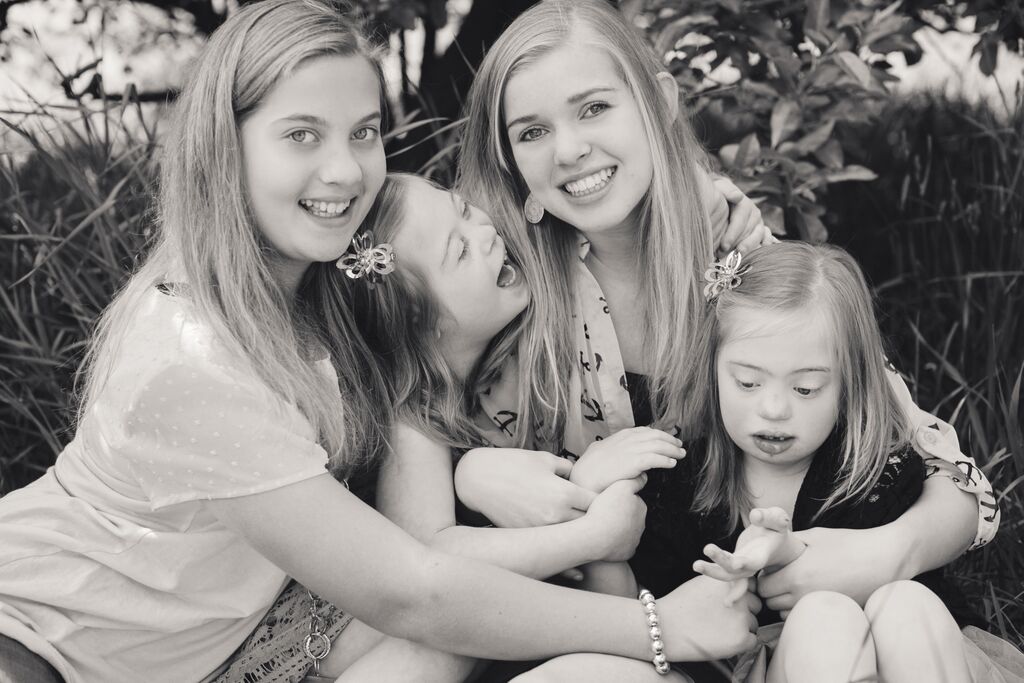
Two of my daughters have Down syndrome. Polly doesn’t like loud noises. Evangeline struggles in restaurants. Both girls have aversions to certain food textures so eating out is tricky. Polly is a routine girl. If Evangeline is in a crowd too long, she will go into sensory overload which includes rocking violently back and forth, crying, and possibly hitting her head on any hard surface she can find.

Honestly? It’s much easier to just stay home; a place that is familiar to my girls. A place where the routine is down pat, their needs are met, and where I can attempt to control their surroundings.

But that’s no way to live

I have to fight the urge to keep my little girls close and box ourselves into a predictable little world.

Kennedy said ‘Conformity is the jailer of freedom and the enemy of growth.’

The only way for our family to enjoy outings and vacations and trips to restaurants is to well, do them. It’s not fun at first. It’s terribly difficult work. We go out to eat, and by the time everyone is putting on coats to leave I’m in an awful sweat. My hands are clammy, one of my four kids is probably crying while the other one is ticked about something inconsequential.

Ugh.

But we do it anyway.

Because all six of us: My husband Sergei, our daughter Elaina, Zoya, Polly, and Evangeline, and I all deserve full lives.

Not only do we deserve bigger, experienced lives, but it is the only way for us to grow, and to become better versions of ourselves.

Eventually, Evangeline will realize that restaurants aren’t scary places. I can buy some headphones for Polly to wear if we go someplace loud. If Evie gets overwhelmed I can take her outside for a walk to settle down. I can hold her in a tight embrace and point out all the things of the world we get to see by putting ourselves out there just a little bit.

Stepping out of our comfort zones is a good choice.

So we are going on vacation

So we go. We’ll pack up the car. Bring toys, games, and books for all the kids. Sergei will load his iPod with family favorite tunes, and I will take deep breaths, and ask God for safety, and light, and fun for all as we head into a new horizon.

This pep talk is helping me get into the right frame of mind … But I’m still not ready to talk about the 14 hour car ride.

Baby steps, right?

Have you gone on vacation with your kids with special needs? Any tips? I’m all ears.

Down syndrome through a dad’s eyes

treyton-arnold-ball-glove

(Join me in welcoming Rob, who writes thoughtfully and beautifully about Down syndrome through a dad’s eyes, at Treyton’s Posse. Welcome Rob!)

Down syndrome through a dad’s eyes

If I close my eyes and concentrate I can almost hear the voices like I was there. I hear my wife Leigh Ann asking me, “Rob is he all right? Is the baby healthy?” I can hear the nurses whispering as they work through the Apgar score for my precious baby boy. Treyton is my fourth child, my first son. He is perfect.

The new normal

I went through similar paradigm shifts with the birth of each of my four children. Prior to their births I could not imagine our family with an additional member. At first it was just my wife and me. I could picture us having a baby, but really, I didn’t have a clue about what it would be like.

Like all new parents we made a few adjustments and settled into life with our new baby. But, when Leigh Ann told me we were going to have a second child I was blown away. How could I love another baby like I loved Bailey? What would our family be like? Soon after Taylor came into our lives it all seemed so natural. Then we had Lindyn. No, I didn’t transfer the lesson I learned with my second child, I went through that same process again with her and then finally with Treyton.

For me, I was content with my family as it was and never thought we needed to expand it. However, once I gazed into the eyes of that little miracle that just entered my life I no longer could imagine life any other way. What I considered normal for my family the day before was no longer normal; we had a new normal in the Arnold house.

One tiny little extra chromosome

I heard them say, “It’s a boy!” All I could think was, “wow, this is going to be different.” Yes, this was our fourth child but our first boy. I like change, it is exciting. This was exciting. As they handed me my son I could hear Leigh asking me if he was okay. As I looked into his eyes I saw perfection. He was perfect, this is my son. He is exactly how he is supposed to be. I did not want any other child, I wanted this one.

Leigh Ann’s concerns about Treyton’s health were unique to our fourth child; she did not ask me that with our three girls. She was worried about what the doctors called “possible indicators” discovered during the pregnancy. The indicators weren’t strong but there were a couple of things that pointed to the potential for Down syndrome. We were told there was a 3% chance that the baby had an extra chromosome, Trisomy 21.

This is the whole men are from Mars thing right? When we were told about the 3% chance I heard that there was a 97% that nothing was wrong. That is an “A” on the grading scale. My wife does not think like me and did worry throughout the pregnancy.

No man left behind

When we were given the official diagnosis of Trisomy 21 I did not care. I was and still am thankful for my son – he is a blessing. The way I see it, each of my kids have unique needs. As parents we work to make sure each child has what they need. This was no different.

My son has Down syndrome and with that come needs that my other kids did not have. As their father I am simply trying to provide the best for each child whatever that is. Down syndrome or not, I will be there for each of my children in whatever capacity they need. No matter what.

About the author

four-color-clover-clear-bac

Like most people, Rob Arnold wears many different hats. He is a husband, a father, and a business person to name just a few of them. When he and his wife were told their fourth child had Down syndrome he began to see things to which he had previously not paid attention. Now he also wears the hat of Down syndrome advocate. You can learn more about Rob Arnold and his journey into the world of Down syndrome at www.TreytonsPosse.com.


Connect with Treyton’s Posse:

Facebook: www.facebook.com/treytonsposse

Twitter: www.twitter.com/treytonsposse

Flickr: www.flickr.com/treytonsposse

YouTube: www.youtube.com/treytonsposse

Pinterest: www.pinterest.com/treytonsposse

Special Needs Parents: I give you permission

happy plain

(I’m over at Not Alone: Where Special Parents Find Community, talking about how sometimes as we parent kids with special needs, we need permission to say it’s hard. Read the whole post here … It’s my first time there. I’d love for you to stop by!)

Special Needs Parents: I give you permission

Are you a parent to a child or children with special needs?

If so, I have a message for you today.

I GIVE YOU PERMISSION.

I give you permission to be tired.

I give you permission to cancel a therapy session.

I give you permission to feel weak.

When it comes to your child with special needs, I give you permission to allow a little grief to co-exist with other emotions like love and joy.

Are you a special needs parent? Then it’s my prayer this post will encourage you today.

READ THE FULL POST HERE …

Adoption: the severe and sublime work of bonding

Evangeline and I in Ukraine after meeting in 2009.

Evangeline and I in Ukraine after meeting in 2009.

Adoption: the severe and sublime work of bonding

She chose the wall

This first night I spent with my freshly adopted daughter from Ukraine three years ago reminded me of watching wildlife.

We were staying at my mother-in-law’s apartment in Kiev, Ukraine and three weeks prior to that night our visits were limited to two-hour intervals at her baby orphanage located outside the city.

That night, upon entering the bedroom, my daughter dove for the large pull out couch pushed up against the wall. Once in bed she observed my station next to her and sized up a blanket rolled up along the part of the edge my body didn’t cover. She realized this was not the plain, low wooden crib she had grown accustom to over the two-and-a-half years of her life in the orphanage, nor were there any other children from her group near her settling in for the night. Knowing my three bio kids back home and the types of tantrums they throw, my immediate expectation was for my little one to scream and howl with fear and eventually make her way over to me, the only other person in her proximity, for comfort.

That didn’t happen. She did not make a sound.

But she was not pleased I was there. She dealt with my presence the only way she knew how; to ignore me. As I lay on the edge of the bed, one foot resting on the floor, the sun set on the 27th day of my stay in Ukraine to complete this adoption.

I tried to imagine the trauma of leaving the only home a child has known, riding in a car for the first time, eating unknown foods, being dunked in a bath for what seemed the first time (she screamed through that) and swallowing a mouthful of blood after someone stuck a purple bristly stick into her mouth, vigorously moving it up and down, up and down.

I could not.

And I decided that first evening to sit near her quietly, a decision for better or worse, to watch the little girl I did not actually know but already loved, and see how she put herself to sleep.

After panning her head from left to right and back again a few times, she planted her pudgy little arms onto her legs while sitting. She started to rock back and forth, all the while grinding her teeth incessantly, and hard. She closed her eyes here and there and chewed her tongue.

I think, although I am not sure, that Evangeline spent a lot of time in her crib at the orphanage. And having been abandoned at birth due to her diagnosis of Down syndrome, she probably never experienced someone lovingly rocking her to sleep. It was still painful to watch.

But not as painful as her next trick. After rocking for forty-five minutes, she rolled over to the concrete wall, covered with meager thin wall paper probably dating back to the 1950s.

Upon making contact she leaned back and proceeded to smash her forehead up against the wall.

This was the only time I broke my role as observer that night.  I placed my hands on her shoulders and whispered in Russian, “nelza, tak ne nada.”  No, no, you don’t need to do that” My husband and children and I lived in Kiev for almost four years as missionaries until the birth of our third daughter.

I could have never guessed that God would have me use my Russian for something like this, though.

Evangeline shrugged me off and I moved her away from the wall. I pulled the blanket from my feet and wedged it between her and the cold, hard surface. She did not contest. Maybe she wasn’t aware she could? After her silent concession she made do with rubbing her head against part of the wall and part of the blanket.

It hurt my heart to watch her. I sat back on the bed and wondered if there would be a day she would let me, no, want me to rock her to sleep.

She chose me.

Fast forward three years.

What can I say? This adoption process has been arduous.

Evangeline and I have stumbled along, attempting to learn a mother/daughter dance, two steps forward in our bonding, a giant leap back. We’re awkward. We step on each other’s toes. I’m sure I’ve made mistakes. And I feel like at times, she still isn’t open to my love.

And worse yet, at times, I’m not open to her.

Last night I was sleeping downstairs on the couch because I’ve been terribly sick with a sore throat this week. I woke up to a smiley face next to me.

Evangeline had come downstairs to find me. I gathered her to me, and she complied.

She just cuddled right in, my six-year-old daughter who hasn’t muttered but a word here and there since she’s come to my family. This daughter whom therapists say is about twelve months old developmentally.

I rubbed her forehead, no sign of a bump from hitting her head. That behavior, thankfully, had long fallen away.

“Hello little one, how’d you find me?” She smiled at me, looking me in the eye, and hunkered down and I thought about how a few days ago I asked her for a kiss, and she bent her head, ever so slightly towards me, along my lips to brush her’s. She had let me in at that moment, just for a moment, and it filled the well of my heart to the brim.

I breathed her in, as we snuggled in the dark of night, thankful that this girl who used to choose to bang her head against the wall to fall asleep now, at least some nights, chooses me.

It’s not perfect, this relationship between my youngest daughter and me.

But it is a relationship.

A mother/daughter relationship, complete with ups and downs, and the continual frightening, beautiful process of knowing one another, the severe and sublime work of bonding for the glory of God.

Thankful for special needs adoption

Thankful for special needs adoption

(In the midst of all my other writing projects, I’ve been writing down snapshots from Evangeline’s adoption in Ukraine :) . Plus, November is Adoption awareness month, which got me to thinking …)

In 2009, my husband Sergei, our older daughters Elaina and Zoya, and I all travelled to Ukraine to adopt a little girl we were to name Evangeline, who happened to have Down syndrome like our youngest daughter Polly.

Our special needs adoption from Ukraine was a bit different from others in the fact that we had lived in Kiev for four years before Polly was born as missionaries. So while there, we stayed with Sergei’s mom. We knew the city and we spoke Russian, which means we could converse with Evangeline’s caregivers while visiting the orphanage.

I’ve been thinking about those seven weeks in Ukraine a lot lately.

I’m thankful for Evangeline.

And although I probably couldn’t have said this the first year she was home with us and much of the second, I am thankful for special needs adoption.

Adoption is painful and adoption is beautiful.

In my experience, it is painfully beautiful. Adoption balances both attributes. It wouldn’t be the same without each. Adoption teaches me about myself, and God, and the world.

The first time we met Evangeline at the orphanage, we went to the backyard to get acquainted.

Kids from her group were inside a large, wooden structure, akin to a pack-n-play here in the States, only three times bigger. In the corner of the play area, a large blue and white striped umbrella shaded the space. The umbrella didn’t fit. Its rightful place was on a beach on Lake Michigan, but not there, in a broken down orphanage twenty kilometers outside of Kiev.

the umbrella isn’t in the shot, but you get the picture

Two workers watched the children. One sat nonchalantly on a stool. Her hot pink painted lips pursed together while she looked through us, bored. The other worker had a kitchen towel in her hand. She went from child to child, clucking in Russian, while methodically wiping each child’s nose or mouth, whatever needed it, with the community towel.

One boy, who looked to be about five, slouched in a baby cruiser outside of the wooden pack-n-play. Drool pooled in the corners of his mouth as he stared off into the distance.

A little girl in the pack-n-play let out a high-pitched giggle and put her arms up to be held.

Another child smiled up at me sweetly.

The orphanage worker holding Evangeline halted, turned towards me and pushed her into my arms. And I was holding her, this fictitious character who, in actuality, was flesh and bones and blood and bowel movements. My arms shook. It was surreal after having dreamt of her for nearly a year, to have this child in my arms.

Our first meeting in Ukraine


If I could write our story the way I hoped meeting my daughter would go, I’d say I fell in love with Evangeline as soon as she was placed in my arms. Back in Chicago I was sure she was mine. I’d fall instantly in love with her.

But in the backyard of her orphanage my heavy thoughts doubled her weight in my arms. Reality sliced emotion.

I had come full circle, from struggling, to wanting my biological child with Down syndrome, to adopting another. This was my shot at redemption.

And I out of fear, I was blowing it.

“Slow down, child.”

God whispered to me through the breeze. For a second, I thought the earth below me was quicksand. But, no. It was solid ground.

Our routine in Ukraine included daily treks to visit Evangeline while we waited for the adoption to finalize. We brought snacks. Elaina and Zoya played. Sergei and I took turns carrying Evangeline up and down the small, cracked sidewalk while a statue of Lenin hovered over us smack dab in the middle of the yard. His cold, stone face accused anyone who dared to meet his eyes.

It was June, and the days were hot in Kiev. The kids were stripped down to diapers and underwear. One day while visiting, I watched an orphanage worker break off a leaf or two and give it to a crying child to appease her.

Sergei and I talked to the workers while we played with Evangeline. It was difficult for me to understand some of them because they spoke surzhyk which translates to “an impure language,” a mixture of Ukrainian and Russian. Most of what the women said was lost on my ill-practiced, strictly Russian speaking brain.

But a few workers, upon realizing I could converse with them in Russian, spoke to me.

“Why do you want a sick child? We have several other children who are much better than her, ” one woman said while Evangeline sat in my lap, her face covered in dried snot. Her legs crusty with dirt. “She is an imbecile,” the worker coolly glanced away as her words hit me like rocks.

I wanted to snatch Evangeline up as the heat rose to my cheekbones. I was suddenly ready to take here home, bathe her, brush her teeth, clean out her ears, lather her up with baby lotion, and rock her to sleep.

I squeezed Evangeline to me and focused on the cement. I felt the worker’s eyes on us. I looked up at her face.

I asked God to help me forgive the hurtful words the worker said, and forgive my crappy heart response. Her job couldn’t be easy. We only ever saw two workers allotted to Evangeline’s group; usually ten to twelve kids, at a time. And they were probably paid the bare minimum, hardly anything to live on in Ukraine’s struggling economy.

I took another breath, and spoke.

“She is who God has for our family. We already love her. We can’t wait to take her home.”

Evangeline has been home for three years.

And God has taught me a lot about myself, and a lot about redemption.

Can I be honest? Adopting a child with Down syndrome from Ukraine was a feeble shot on my end at redemption.

Outwardly, I deemed myself altruistic. Adopting was the right thing to do. A life would be saved. But really, my intentions were selfish. I wanted a do-over. I needed a do-over because three years earlier, I had given birth to a child with Down syndrome, and grieved the child I expected, and held myself back from loving her at first.

I used to think of redemption as a one-time thing. People of faith talk about God redeeming us, buying us back through his Son. I subscribe to this theology. I buy into the idea that God liked me enough to trade his son for me.

But I also realize now that redemption happens all the time, over and over, everywhere.

We are all a work in progress. There’s a continuous need for redemption in my life. And even though my intentions weren’t entirely in the right place regarding the adoption of Evangeline, God, OF COURSE, knew better. He redeems me again and again as a person, and as a mother through the adoption of Evangeline.

I am thrilled to report that those little ones I talked about in her group:

The boy staring off into the distance,

cornishadoptionjourney.blogspot.com


the girl who raised her arms up for me to hold,

www.lorainefamily.blogspot.com


the sweetly smiling little thing who met my gaze,

Creation Speaks Photography
www.ellenstumbo.com


… They have all been ADOPTED, and are thriving.

This Thanksgiving, I am thankful to report that these children will enjoy turkey day with their parents and siblings here in the States through special needs adoption.

I know the families and I think each of them would say that adoption isn’t easy.

Adoption is painful.

Adoption is beautiful.

But mostly, adoption is redemption … For us all.

And I am thankful. Eternally thankful.

Learn to do right, seek justice, defend the oppressed, take up the cause of the fatherless, plead the case of the widow. ~Isaiah 1:17

*To read more about these wonderful adoptive families, click on their pictures.


A little fiction for your weekend enjoyment

http://www.stockfreeimages.com/

A little fiction for your weekend enjoyment

I dabble in fiction, although I am mostly a non-fiction writer. Here’s a piece I wrote a couple years ago about a family dealing with a new diagnosis. It was published in a small journal on-line, but I don’t think it exists any longer.

Malcolm

“Are we there yet?”

“Lucy! You have to wait five minutes before asking again,” Chris said.

My husband choked up on the steering wheel and leaned in towards the dashboard. We had been lost for an hour. Lucy needed the bathroom. Malcolm, our newborn son, was asleep.

“Chris, stop at a gas station and ask for directions.”

“Jane, we just have to backtrack and find the cross street. If Lucy didn’t talk incessantly, we’d already be there.”

“Not that it matters,” I whispered. This wasn’t my idea. Malcolm was only nine weeks old.  A baby. Why was my husband making me do this?  It’s Saturday, our day off. I wanted to go to the park and push Malcolm in a swing. Watch Lucy go down the red, twisty slide.

“Jane, I found a support group for families with kids, well, kids like Malcolm,” Chris stated while my hands were in a sink of sudsy water Monday evening. I switched to Palmolive because the commercial said it makes your hands look younger.

Younger.

I never should have wanted another child. Lucy was perfect, beautiful, smart.

“But daddy!” Lucy called out.

“Damn it, Lucy!”

“Chris!”

“What?  I’m sorry.  Lucy, I’m sorry,”

Lucy hunched down into her seat. Cars passed. I imagined people on their way to do something usual on a Saturday; stop by Wal-Mart for a few items or on their way to vacuum out the car.

Malcolm sighed in his sleep. Lucy hid in the back seat. I looked over at my husband, his knuckles white as he held the wheel, as if he let go the street would crack open and our family would fall into a giant abyss.

That didn’t sound half bad to me.

“We’re not that late,” Chris said. “The lady on the phone was nice. She said the group meets the first Saturday of every month and we were welcome anytime, even if it’s just to stop in for ten minutes. And did I tell you this, Jane? Before we hung up, she told me congratulations. Congratulations on the birth of your son,” Chris’s voice cracked.

Just then a car swerved over into our lane. Chris darted off the road to avoid a collision.

“Dammit,” Chris laid on the horn. Malcolm woke up and started to cry.

“Mommy, I’m scared.”

I scooted over to look at Lucy in the rear view mirror. Honey, we’re OK.”  I said as tears ran down my cheeks. “I’m OK. Daddy’s OK. You’re OK. And, Malcolm, … Malcolm’s OK. We’re all OK.”

“That guy almost slammed right into us”, Chris seethed.

Malcolm shrieked and cried. It was time for him to eat. The milk in my breasts tingled as it dropped down, filling me up like two summer water balloons.

Our car was stopped on the side of the road.

I looked down at my hands.

“Swanson Street.”

“What?”

“This is Swanson Street. This is the cross street we need.”

Malcolm settled now that we were still. Lucy whimpered.

Chris checked his mirror and turned on the left blinker.

On coming out of depression

On coming out of depression

One of the strangest things about coming out of a recent bout of depression is fighting myself not to fall into it again.

And then re-learning how to do life.

As I get healthier mostly by working on catching my thoughts before they catch me, focusing more on the things of God, seeing a therapist, and taking medication, I am shocked at how ingrained my depressive behaviors have melded into me.

In the past year during my times of extreme sadness, I spent a lot of time in bed.

Now I am up, walking around, hugging my kids, kissing my husband, and looking my friends (the ones who have stuck it out) in the eye. I find myself checking in with, well, myself. “Do I need to go to bed? Should I go to bed? I should be in bed, right?”

It’s just what I know. Things get difficult, and I crawl in bed.

Sometimes now Sergei comes home from work and we look at each other, and I just know we both are thinking, “what the hell are you still doing up?”

It’s ironic. Now that I am doing better in general, I fight my thoughts. I fight waiting for the next time it comes. The Big D. Depression. My thorn in the flesh.

I fight to live in the now.

I have more bad habits to deal with. I need to get out more. I’ve become unsociable. I am more comfortable typing words here on the blog than speaking to people in real life.

It’s like re-learning how to live without an actual health issue. I haven’t come out of a coma, or spent a year in the hospital. But in a lot of ways it feels like I have.

Sometimes I catch people’s eyes at church, or with friends, or at the kids’ school, and I notice that they notice.

For a second, the person opposite me gets that this is hard … Doing life, every day.

I silently nod and continue.

It’s hard. But it is worth it.

Recently, I’ve decided to start a book on depression. I have notes. I am working on a proposal. And because a book length project requires focus, and brain power, I’ve decided to make this blog more raw. A lot of times I craft a blog post here much like I would for a paying gig at a magazine. I blogged for 31 days during the month of October for Down syndrome awareness. It spent me.

But I think, for a while at least, I am going to just write, and share my heart, and my struggles, and my happiness, and my relationship with God (and the days when it is lack thereof).

I’ll just free write and let the words fall on the eyes of whom they may.

Feels good.

I’m thankful that I am coming out of depression.

But there is more work to be done.

On a totally separate note: I am intrigued by sister wives. That’s bad, isn’t it?

What to do with a severe and profound label for my daughter with Down syndrome?

http://www.stockfreeimages.com/

What to do with a severe and profound label for my daughter with Down syndrome?

I am immobile this morning.

It happens with me, what with my struggle with depression, parenthood in general, kids with special needs, pre-teens with attitudes, hang nails, you know, big stuff.

Sergei and I had a an eligibility meeting a few days ago with our daughter Evie’s (6 years old, Down syndrome, adopted from Ukraine) school regarding her services and placement. 2 hours 15 minutes later, we left with a promise to reconvene in two weeks, and somehow I feel like I got in a fist fight (usually do after IEPs).

Evie tested in the severe range of disability globally for her three-year re-evaluation. Her team at the school suggest we place her in a severe and profound classroom, so Sergei and I are researching here in Chicago with plans to visit schools. I don’t want her in a severe classroom, but I also don’t want her to get lost in a moderate classroom (where she’s been, and she does get lost a bit). The psychiatrist said it was difficult to test her because she wouldn’t do, well, anything.

I seriously don’t know what to do … And having the severity of her delay on paper is knocking the wind out of my sails, even though I knew it already.

Bad timing to feel like I am losing my voice when I need to speak on her behalf.

So, what should I do?

Well, I know there are a few things I MUST do:

1) Pray. I am a person of faith, so I should take this conundrum and all the emotion and questions wrapped up in it and place it at God’s doorstep.

2) Research the severe label and visit severe and profound classrooms in the city to see for myself if this setting would be a good fit for Evie.

3) Let myself grieve the news. You can’t get above, below, or around this kind of stuff. You have to go through it.

4) Spend time with Evangeline. At the end of the day, she is still the same little girl I know and love … so I’ll focus on her, and thank God for her, and put the papers away, at least for a little while.

What do you do when dealing with difficult news? Any of you have a child in the severe and profound disability range?