Depressed mom = failed mom

http://www.stockfreeimages.com/

http://www.stockfreeimages.com/

Depressed mom = failing mom

I’m going to hit a nerve today.

For those of us moms who struggle with depression, one of the biggest thoughts that will run through our minds is this: I am failing as a mom.

I am failing as a mom.

At least, that’s one of the primary thoughts I battle in my depression.

I’m sure that every mom thinks such thoughts from time to time, but for depressed moms, these feelings are frequent, and amplified, and terrifying, and excruciating.

So, I fight.

When I assume I am failing as a mom because of my depression, I work at grabbing hold of those thoughts and putting it them in their place.

If you think you are a failing mom because you are depressed today, here’s five things that may help you a little bit with your thought patterns.

I am not an expert on maternal depression but I am a mother who struggles with it. This list is from my personal experience and isn’t proven fact. But it might help. I share my findings with you because I know there are many moms like me suffering in silence.

1. Remember that depression is an illness.

The Mayo Clinic says that ‘more than just a bout of the blues, depression isn’t a weakness, nor is it something that you can simply “snap out” of. Depression is a chronic illness that usually requires long-term treatment, like diabetes or high blood pressure.’

Yes, you have to work at getting healthy but remember that depression is an illness. It is not your fault you are depressed. (Not sure if what you are feeling is depression? Here are some signs.)

2. Give yourself a small opportunity to be there for your child today.

If your depression hasn’t robbed you completely of energy and ability today, do something with your child. Read him a book, watch a show together, make a favorite snack. He will remember these things. They fill him up. They will be in his love tank on the days you can’t spend quality time with him.

3. Get help.

If you are depressed, you need to get some help. Talk to one person you trust and tell him or her about your struggles. Make an appointment with your doctor. Talk to your pastor. You may need counseling, or medication, both, neither, other, whatever. The point is you are not a failing mom. You just need some help.

4. Make a list.

When you start to feel like you are failing as a mom, pay attention to the trigger. What, exactly did you fail at? And was it truly a failure or has your mind jumped to conclusions? Depressed minds overreact and assume. Try to separate truth from reality. Maybe you did fail. If so, apologize, try to do better. But if you didn’t, or if it isn’t that big of a deal, then let it go. You don’t have that kind of energy to mull over a false thought.

5. Remind yourself of your children’s love.

This is a biggie for me. I have chosen to be open with my kids about my struggles with depression. They know about it, they pray for me, and they still love me. Think of the good times, think of their voices saying, “I love you, Mom.” Trust me, even though they see you struggle, they know you love them. And they love you. And if you are questioning that at all, then pull them to you and remind them of your love. I’m pretty sure they’ll say it back.

A spouse’s perspective on depression

http://www.stockfreeimages.com/

http://www.stockfreeimages.com/

A spouse’s perspective on depression

(Help me welcome guest blogger Leanne today! I love this post. Hope you find it helpful as well!)

“Is it the end of the world that she feels that way and you feel this way?”

Our counselor was finishing the end of our session.

“No, it’s not the end of the world…” But my husband didn’t sound sure.

He swiveled to me.  “Is it the end of the world that he feels that way and you feel this way?”  Same question… Same hesitation.

“No, but sometimes it feels like it.”  I was being honest.

“It feels like it’s the end of the world.  But is it?”  He was pushing.

“Not so far.”  I was hedging my bets.

My husband struggles with cyclical dysthemia, a chronic depression that can be “covert”, masquerading as stress, anger, or fatigue.

So for the previous 18 months, a lot of time and dollars have been devoted to finding counselors: one for him, one for me, and one for us.  The conversation above was with the “us” counselor.

That’s because a couple of years ago, my husband imploded.

Covert and chronic depression caught up with us.

We are both clergy and we were working at the same large church with very demanding schedules. Our fourth child, a beautiful boy with Down Syndrome, was a toddler; our oldest child was still in elementary school. My husband was caregiver for his elderly grandmother and an uncle dying of AIDS. Our best friends had lost a child in a terrible accident, and we were caring for church members who were facing unthinkable tragedies.  Anyone would be depressed.  But if you were already mildly depressed, the cliff loomed large.  One could debate whether he slipped or jumped, but he fell down hard; and he nearly took his whole family with him.

Now a new horizon looms for all of us, one with pinpricks of rainbow light that only come as sun filters through rain clouds.  If I had to sum up in one idea what “saved” us (other than faith, prayers, grace… These are our bastion, our strong-tower).

I have learned this…

Each of us stands at a river’s bank.  The river runs with different speeds based on climate at the top of the mountain, something I can’t even control.  And the river carries objects downstream, some small and some large, like river logs. Those river logs are feelings, and they come and they pass because the river is always moving.  Our human tendency is to recognize a feeling, and jump on the log, and ride it to its end, whether that is a soft riverbank or steep waterfall.  My husband and I had started riding these logs over the falls regularly.  Our feelings felt like “the end of the world.”  But we’ve learned that our feelings pass. New feelings are just around the corner. Enjoy the good feelings; endure the bad feelings; know that feelings are temporary.

We are also done rescuing each other, because “rescuing” only results in both of us going over the edge.

I can let him jump in, and if I will stay on the river’s edge, I am more able to offer him a hand out of the water when he is ready to stop “riding the feeling.”  He does the same for me. Slowly we are learning to hold hands on the river’s edge and whisper to each other, “the feelings pass; wait for the next feeling.”  Each time we make a choice for ourselves, make a choice not to rescue each other, let a feeling pass, each time we have and give permission to feel our feelings and let go of our feelings, we create a stronger embankment.

Biopic (1)

Leanne Burris is a pastor/preacher in the UnitedMethodistChurch.  When she grows up, she’d like to be a writer.  In the mean time, she is blessed to enjoy life with her talented and kind husband, Cliff; their four beautiful children; and her lively congregation in Gulfport, Mississippi.  Leanne knows she’s had a great weekend when there is a finished book beside her bed, sand between her toes, and the smell of seafood lingering in the air.  She ponders and postulates about these goings on at compasstrinity.blogspot.com

*Would you like to guest post at gillianmarchenko.com about special needs, faith, motherhood, disability, or something else you come up with? Email me at gillianmarchenko@gmail.com with your idea.

10 things not to say to a mother fighting depression

http://www.stockfreeimages.com/

http://www.stockfreeimages.com/

10 things not to say to a mother fighting depression

For the last two months I have been working on my latest book project about depression and motherhood. While writing, I came up with 10 things not to say to a mother fighting depression. Of course, these are just my ideas from experiences I’ve had in my personal battle with depression as a mom. Let me know what you think!

10. Go outside for a walk.

It’s true that for me, sunshine and fresh air help me sometimes when I am depressed, but I get tired of people suggesting these the outdoors like I never thought of it or tried it. Now, I do have a friend who shared with me how exercise and healthy eating made a difference in her husband’s depression. I  appreciated the careful, loving way she attempted to help me from experience.

9. You’re lazy.

This is a tough one for me. My mom and I recently figured out that I struggled with depression as a kid, but I was always just thought to be lazy. I have friends and family members who equate my depression with laziness. I get it. If a person hardly moves and stays in bed, it can seem pretty lazy. But please understand, I’m not choosing NOT to do things. I simply, when I am depressed, am not able to.

8. Oh, my friend had that. She did XYZ to get rid of it.

When I am not in the midst of a major depressive episode, I appreciate hearing stories about others who have found helpful ways to elevate their pain in depression. But if I am really struggling, please don’t blow me off with a pat answer to my struggle. It’s real. It’s painful. I need understanding and validation.

7. Your kids shouldn’t have to go through this (i.e. You’re a bad mom).

This is the hardest part of depression and motherhood. Kids absolutely should not have to go through this. Nor should their mothers for that matter. Trust me, guilt is a big part of the cycle of depression, especially when one has kids. Find ways to encourage the mom, and point out concrete examples of her ability to mother well. Our kids are our biggest motivators to tackle depression.

6. Snap out of it.

A lot of people can’t snap out of depression. It is an illness, one that no one prefers to have. Therapy, medication, exercise, eating right, and other things help, and when they do, Praise God! But it is not a question of a person snapping out of it. To say that is just mean.

5. I’d be depressed but I don’t have time.

Ah, the active busy mom who just can’t understand how another mom has the time to be depressed. Comments like this hurt. Moms who fight depression, again, do not choose the illness. Please know, we really want to be able to do more, and there are times when we are jealous of you and all that you accomplish. Depressed moms don’t make time to be sad. They carve out time to be well.

4. Pray harder.

Ouch. If only our faith was stronger, we would not be depressed. God has blessed us with so much, isn’t it disrespectful not to be joyful? The joy of the Lord is our strength, is it not? If you have a friend who is depressed, absolutely pray for them. Absolutely gently encourage them to pray, and seek God, and read scripture. But please don’t make their illness a spiritual deficit. Trust me, if they are people of faith, they are praying like hell.

3. Just take an antidepressant.

Antidepressants do help a lot of people who struggle with depression. And I am so thankful they make a difference in my battle. But our methods of treatment are not really your business to discuss. If your friend had cancer, would you be inclined to advise her the best route of recovery?

2. If you tried harder, you’d feel better.

People who struggle with depression WANT TO FEEL BETTER.

1. How can you be depressed when you have so many good things in your life?

Whether or not one’s depression is situational or clinical, it is not a decision a person makes. “I think I’ll be depressed today.” Um, no. Please don’t say something condescending like this. But also, please, again gently, tactfully, point out the good things in our lives. Chances are, we need to hear about them.

If you battle depression and are a mom, I’d love your feedback. Do you agree, disagree? What would you add or omit in your list?

A glimpse at a mother’s depression

A glimpse at a mother's depression, and the quilt that ensues because of it

A glimpse at a mother’s depression, and the quilt that ensues because of it

A glimpse at a mother’s depression

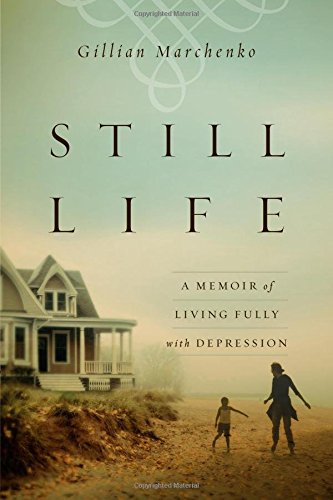
(Because I am such a fun gal, I’ve decided to share a little bit of my latest work in progress as far as writing goes. I am working on a project about my struggle with chronic depression while attempting to mother my four children, two with Down syndrome, and two with the usual number of chromosomes, and live in the realm of professional Christianity as a former missionary and now as a pastor’s wife. Depression isn’t usually a word a lot of Christians talk about. Well, I’m talking about it. And I will continue to talk about it because it needs to be talked about, and it helps me to heal. I’m not depressed today (mom, you don’t have to call after reading this), but whenever I read this scene, the words bring weight back to my chest.)

I’d like a drink of water, but I can’t imagine getting out of bed, walking downstairs, turning on the faucet and filling a glass to bring to my lips.

I hear the kids downstairs, they are home from school. My husband is telling them to put away their coats, hats, and gloves. Polly is singing a song from Super Why, and Zoya is complaining that Elaina is mean. Pots and pans shuffle around in the kitchen. I imagine Sergei clicking on the gas to the oven, and pulling out a pan to start dinner. I listen, holding my breath, wondering if the signs of life downstairs will bring a pulse back to my chest? I push the air out of my cheeks, and feel my body sink deeper into the mattress. I roll over, and put the soft white comforter with a black design over my face.

“Mom?”

I’m down under a mud puddle somewhere in a dream. I hear a muffled voice. “Mom? It’s time for dinner. Mom?” I roll onto my back and squint my eyes up at Zoya, my middle child, the easiest baby for me, the one who still crawls up in my lap and rests her head on my breast like she’d nurse if she could.

“Hi.” I clear my voice. This is where it gets tricky. I don’t want to scare my kids. I glob together blips of energy lollygagging in my body. My mind gathers them together like worn out pieces of left over pie crust that won’t stay together, even with a little flour and spit.

“Hi honey. How was school?”

“OK.”

Zoya’s voice is small and distant. I see the fear in her eyes, and work hard to remember if I’ve taken a shower today, or yesterday, or if I will, perhaps take one tomorrow. I can’t imagine what I must look like.

“Um, Papa says it’s time for dinner. Can you come down and eat with us?” My daughter, her face creamy and smooth, like white velvet. I catch her sometimes, when I’m well, lying in her bed alone. “Whatchya doin?” I say nonchalantly. “Nothing, just resting.” “OK, honey, love you.” I walk down our light yellow hallway wondering if she feels sad at all, deep down in her heart? Would she tell me if she did?. I worry she’ll get whatever whacked gene I seemed to have inherited that makes life bad and hard for no real, apparent reason. I hope to God it isn’t so.

“No, I’m not going to come down for dinner tonight. I’m still not feeling great.”

“Ok, do you want us to bring you up a plate?”

“Maybe a little later.”

Zoya bends toward me, wraps her soft arms around the bulk of my body hidden under the covers. Her embrace stops the ache, just for a second. A tear slides down my cheek and I wipe it away before she can see it.

“I love you, Mom.”

“I love you, too, Zoya.”

She leaves my bedroom, and I wriggle around on the mattress to find a way to ease the pain of my heart and body. She closes the door.

I’m covered in black again.

Listen to my podcast with GirlfriendIt Radio!

Listen to my podcast with GirlfriendIt Radio!

Closet drinking, Jesus, sitting next to real people instead of the computer, girlfriends proclaiming no judgement zones, vulnerability, making small measurable goals daily, the importance of reading the Bible, depression, laughter …. These topics and more were discussed yesterday on GirlfriendIt Radio with me, Patty Wyatt and Lisa Jernigan.

This is the second radio interview I’ve done. Patty and Lisa asked great questions and made it so easy for me to open up about times in life when I’ve failed one hundred percent, and how when I am falling, I might as well fall into Jesus’ lap. We focused on my depression struggles as a pastor’s wife, but ended up throwing in a lot more content.

We are cups, constantly and quietly being filled. The trick is, knowing how to tip ourselves over and let the beautiful stuff out.  -Ray Bradbury

Check it out! Turn it on while doing the dishes, or folding laundry, or just sit down on the couch, and pretend the three of us are there with you.

Oh, and afterward while listening I realized that I am long-winded and could probably be crowned the queen of run-on sentences. Sorry about that! :)

He will not let your foot slip–he who watches over you will not slumber; Psalm 121:3

Listen to the podcast: http://ow.ly/fSTpi

GirlfriendIT Radio on Facebook

GirlfriendIT Radio on Twitter

Find out more about GirlfriendIt Radio at Girlfriendit.com.

Big thanks to Patty and Lisa for the great opportunity!

Broken hands

Broken hands


I noticed something odd this year as our family decorated for Christmas.

Three of our Christmas decorations; an angel, and the two separate Marys from nativity scenes all have had their hands broken.

Broken hands.

The angel was broken a few years ago. I remember the scene well. My daughter Polly was playing with a couple of nutcracker ornaments on the bookshelf when she bumped it. The angel, standing prominently on top, wobbled off the side of the bookshelf. Her right extended arm holding a star for all to see, clipped Polly on the forehead and broke off. The cut on my then three year old daughter gushed. “Not this, not now,” I exclaimed as I rushed over, swooped her up, and called for my husband Sergei to help.

Around that time three years ago, Polly had been diagnosed with Moyamoya, a scary syndrome that thins arteries in the brain to the point of strokes and seizures, (in addition to having been born with Down syndrome), after witnessing an outwardly seizure exhibited while waiting for pancakes at a Bob Evans Restaurant in Michigan, that, afterwards left her temporarily paralyzed on the left side of her body, and through tests proved to be a catastrophic stroke. We were waiting for her first brain surgery to combat the newly detected disease.

We didn’t know what else to do while we waited, so we decorated for Christmas.

And gathered together as a family each night leading up to Christ’s birth, in advent, waiting, waiting, for our third daughter to have surgery before the next stroke or seizure hit, and waiting, waiting, waiting, for the hope of the Christ-child.

After the bleeding on Polly’s head subsided, and she was happily snacking on goldfish and watching a rerun of Barney on television. I picked up the one armed angel, and, upon realizing that God was there with us, protecting Polly from fallen angels and from seizing within, I quietly placed her back on top of the bookshelf, broken, more real, closer to me in her handicap, and closer to God in the fact that he was there, with us, in our brokenness.

On coming out of depression

On coming out of depression

One of the strangest things about coming out of a recent bout of depression is fighting myself not to fall into it again.

And then re-learning how to do life.

As I get healthier mostly by working on catching my thoughts before they catch me, focusing more on the things of God, seeing a therapist, and taking medication, I am shocked at how ingrained my depressive behaviors have melded into me.

In the past year during my times of extreme sadness, I spent a lot of time in bed.

Now I am up, walking around, hugging my kids, kissing my husband, and looking my friends (the ones who have stuck it out) in the eye. I find myself checking in with, well, myself. “Do I need to go to bed? Should I go to bed? I should be in bed, right?”

It’s just what I know. Things get difficult, and I crawl in bed.

Sometimes now Sergei comes home from work and we look at each other, and I just know we both are thinking, “what the hell are you still doing up?”

It’s ironic. Now that I am doing better in general, I fight my thoughts. I fight waiting for the next time it comes. The Big D. Depression. My thorn in the flesh.

I fight to live in the now.

I have more bad habits to deal with. I need to get out more. I’ve become unsociable. I am more comfortable typing words here on the blog than speaking to people in real life.

It’s like re-learning how to live without an actual health issue. I haven’t come out of a coma, or spent a year in the hospital. But in a lot of ways it feels like I have.

Sometimes I catch people’s eyes at church, or with friends, or at the kids’ school, and I notice that they notice.

For a second, the person opposite me gets that this is hard … Doing life, every day.

I silently nod and continue.

It’s hard. But it is worth it.

Recently, I’ve decided to start a book on depression. I have notes. I am working on a proposal. And because a book length project requires focus, and brain power, I’ve decided to make this blog more raw. A lot of times I craft a blog post here much like I would for a paying gig at a magazine. I blogged for 31 days during the month of October for Down syndrome awareness. It spent me.

But I think, for a while at least, I am going to just write, and share my heart, and my struggles, and my happiness, and my relationship with God (and the days when it is lack thereof).

I’ll just free write and let the words fall on the eyes of whom they may.

Feels good.

I’m thankful that I am coming out of depression.

But there is more work to be done.

On a totally separate note: I am intrigued by sister wives. That’s bad, isn’t it?

Can a Christian be depressed?

 Can a Christian be depressed?

Sometimes when depression rears its ugly head, I find myself wondering how a Christian can be depressed if the joy of the Lord is our strength.

But then God nudges me, and shows me that I am asking the wrong question.

I shouldn’t be asking how or why a Christian gets depressed.

Because I am a Christian.

I get depressed.

Why spend time deciding if it is right or not?

Those questions are a waste of the small reserve of energy I have at times like this.

I should just ask God for help, and to sit closer to me in life.

And realize that he already is.

But this I call to mind, and therefore I have hope: The steadfast love of the Lord never ceases; His mercies never come to an end; they are new every morning; great is Your faithfulness. “The Lord is my portion,” says my soul, “therefore, I will hope in Him.” Lamentations 3:21 – 24

Feeling sad today?

Pray.

Take a shower and get dressed.

Pick one thing to do; doesn’t matter how small or how big.

If you have children, look them in the eye and hold them tight.

Breath out another prayer.

And then come sit on the couch with me.

To do the useful thing, to say the courageous thing, to contemplate the beautiful thing: that is enough for one man’s life~ T.S Eliot

http://www.stockfreeimages.com/

My glass is half-empty, thoughts on a Christian struggling with depression


A lot of people talk about their moods with the metaphor, “my glass is half-full.”

Well, because of my struggle with depression, most days my glass is at best half-empty.

When it gets really bad, my glass is all broken up. There’s no water in sight.

And sometimes, well-meaning friends try to help me. They come at me with glue and duct tape and spackle. It the person is a Christian, she might say “maybe there is sin in your life that you need to confess.” “The joy of the Lord is your strength.” “How can you be sad when the victory is yours?”

This is how they think my glass should look:

But through the years of going up and down with depression, I’ve learned that the really beautiful parts of me have come to be through my brokenness. God doesn’t hand me a parfait cup and tell me to get my act together, to try harder, to get outside and take a walk in an effort to feel better.

No.

When I’m all broken up, he holds me.

He quietly shows me that when I am broken, I am most beautiful to him.

Some would say that I am a glass half-empty kind of girl.

It’s true. I am.

And even though there are days my body is racked with pain without reason, even though some days everyone around me sees the sun, and I am in the dead of night, God  crouches down next to me and whispers in my ear: this is how I made you. You are beautiful to me, empty, broken glass and all.

Christ is building his kingdom with the broken things of earth.  People desire only the strong, successful, victorious, and unbroken things in life to build their kingdoms, but God is the God of the unsuccessful – the God of those who have failed. Heaven is being filled with earth’s broken lives, and there is no “bruised reed” (Isa. 42:3) that Christ cannot take and restore to a glorious place of blessing and beauty.  He can take a life crushed by pain or sorrow and make it a harp whose music will be total praise.  He can lift earth’s saddest failure up to heaven’s glory. -J. R. Miller

Christ is building his kingdom with the broken things of earth.

This is how I made you. You are beautiful to me, empty, broken glass and all.

Post-adoption depression

Post-adoption depression

Last Thursday I took Evangeline, our adopted daughter from Ukraine, five years old, diagnosed with Down syndrome, to a developmental pediatrician.

“I heard this doctor is good at what he does, and I want his opinion about Evie’s lack of development since she’s been home from Ukraine,” I affirmed rather loudly to my husband Sergei in an effort to hide that really, I was taking Evangeline to this doctor for a second opinion.

A year ago, Evie was evaluated at the Erikson Institute here in Chicago for Autism. At the time, her main activities included rocking back and forth, sitting on her bed, and looking at a light-up toy. Her eye contact was sporadic at best and she could not tolerate textured food nor touch (unless it was rough housing). I was certain we would come home with a dual diagnosis of ASD (autism spectrum disorder) and Down syndrome because almost every time I reached out to my beautiful blond little girl, my hand would get slapped.

After several appointments, Erikson concluded that Evangeline was not on the spectrum, but probably suffered from the debilitating effects of orphanage life paired with cognitive and developmental delays that can accompany Down syndrome.

But I wanted an answer

When the report came in the mail, I opened the letter while sitting on the toilet seat behind a locked bathroom door and cried. On some level, I wanted the dual diagnosis because I wanted answers. I wanted to know why Evie ground her teeth constantly, why she sought out dust and dirt to eat but refused real food. I wanted to know why she scratched her sisters when they tried to hug her, and cried at loud noises, and sat off to the side of our lives alone, most days, rocking.

But I did not get a concrete answer. I got a “keep doing what you are doing. Find more therapy opportunities, give her time to bond with your family.” And slowly over the next few weeks, I started to shut down. I found it too painful to try to connect with my daughter. For months, I went through the everyday motions of caring for my family as best I could, all the while holding back from climbing into bed. I no longer attempted to bond with Evie. If she was fine being a part of our family without really being close to me, than maybe, I could live like that too.

Wrong person diagnosed

I was seeking out the wrong diagnosis for the wrong family member. Sure, it was good to have Evie evaluated a year ago. She certainly had characteristics that could point to ASD. But really, I was the one who needed the most help. I was struggling from post-adoption depression, which could have only been aggravated by a little post-traumatic stress disorder thrown in after Polly’s stroke, diagnosis of Moyamoya, and two brain surgeries. After our time at the Erikson Institute, I quietly unravelled.

I have struggled with depression all my life, but alas, it is kind of like that pesky monthly period for women. Every month I am shocked that my foul mood results with menstruation. And I am 36 years old!

Depression is like that for me, too. It sneaks up on me: a few aches and pains, feeling a little down in the dumps, sleeping poorly. I fight, I do what I absolutely need to for the family and then when I can’t anymore, I get into bed and I don’t get out.

I started to see a doctor and a therapist, but I wasn’t feeling better. I cried out to God to help me, to show me how to trust him and get back on track, but to no avail. I struggled for months, but still, somehow managed to post perky facebook stati often enough so that people outside my direct family wouldn’t suspect a thing.

But I was drowning.

About three months ago, God gave me the strength to try again to get help for my depression. I went back to my doctor and let her put me on a higher dosed anti-depressant. I started seeing a different therapist and we clicked right away. I started to wake up in the morning and notice that the sun was shining.

And I saw Evangeline, a little girl considerably changed from a year ago.

Since Evie has been with us (over two years) there have been little breakthroughs here and there in our bonding. I liken them to nicking the surface of a frozen lake with a BB gun.

Now that I am above water again in life, the ice is starting to thaw. I can sit a stare at Evie for a while, marvel at her button nose, appreciate her smell, want to pull her to me.

Why the second opinion?

So, why did I take Evie for the second opinion last week?

Because I wanted to make sure that a dual diagnosis isn’t in the picture for our girl. A lot of her behaviors have fallen away but she has a lot left. And although we are doing much better, I am now struggling with the guilt of that missed time when a shadow of a mother was parenting my daughter.

At the appointment, Evie climbed up into a chair, uninterested in the train set the doctor attempted to entice her with. But she laughed when he tickled her, and followed his finger as he played with her, and looked both the doctor and me in the eye almost the whole time.

I loved the doctor. He was a bit brash and un-orthodox (took a text from his wife during our interview and laughed out loud at what she wrote :) . But he cut to the chase with me and it was just what I needed.

“I don’t see any definite red flags regarding a dual diagnosis off the bat, of course, if you’d like, we can do a full evaluation of Evangeline to get more in-depth. But I have to ask, why are you here? You’ve already had your daughter evaluated at Erikson?”

“Because, well”, I took a deep breath. “Because I am afraid I am not doing enough. Our other daughter got sick and ended up needing two brain surgeries six weeks after Evangeline came home from Ukraine and I. . . well, I’ve struggled with depression.” I kind of left my answer there but in my heart I added, I am afraid that I have already failed her.

“Mrs. Marchenko, your family has been through a very difficult time these last few years. I want you to know, you are doing a good job with your kids.”

I had to look away as the tears pooled in my eyes.

“And now, Ms. Evangeline,” the doctor turned to Evie and let me attempt to compose myself.

After the visit to the doctor, I realized I had been looking for two things: 1) the wrong diagnosis, and 2) validation that I am the right mom for my child.

I share all of this with you because I am notorious for putting it all out there. It doesn’t occur to me to keep things to myself. My husband takes issue with my need to tell people how much I spent on the sales rack at Target.

But more importantly, I share this because adoption is beautiful, but it is also very hard. I share this because  other parents and caregivers are struggling today. Post-adoption depression is real. I want you to know you are not alone. At some point, your feelings may be out of your control. Get help. There is no shame in taking care of yourself in order to care for your family.

One last thing: With God’s help, we all can be the right parents for our children.

Post-adoption depression resources:

Adoptive Families

Baby Center

Adoption Issues

Jen Hatmaker, After the Airport